Nurture Marketing

There are two results from marketing according to JustUnderstandingData. There are the low hanging fruitthe leads from prospects that want to buy now and immediately enter your sales process. Secondly, there are the leads that are seeds which need to be planted and nourished. They may turn into buyers in the future when they are ready and feel properly nurtured. It is this second group that these thoughts will address. Press release distribution services are useful tool to generate media coverage to position your local business as an expert in your field and ultimately help your business grow and succeed.

What do you do with a seed? You plant it. You water it. You make sure it gets the right amount of sunshine. Sometimes it takes and it grows big and strong and sometimes it doesn’t. Same thing with a new contact, be sure to check out socialboosting.com.

The new contact is meeting people all the time. Those new people will have top of mind recognition unless you continually remind your contact that you’re there and have something worthwhile to offer, and that's where online marketing have a relevance and that's why using services like SEO service from Milton Keynes could be a really good option for this.

What’s the best thing to offer? In the professional services arena, education is the best thing to offer. It positions you and your company as experts. It keeps you top of mind. It shows your continuing value as a source of current knowledge. It gives you the opportunity to help the prospect uncover his need so that he is more likely to eventually sense that he has a problem that needs solving. It allows him to assess various vendors in the marketplace and then choose to develop a relationship with you, or you could develop relationships online, by using a website for your clients, all you will need is a good web design and resources from the seo tools centre which could be very helpful. We suggest visiting https://victoriousseo.com/markets/national-seo/ to learn how SEO can help your business.

People buy from people. Utilizing this time between making the initial contact and entering the buying conversation is perfect time for you to make a connection. Incorporating emotional intelligence into how you nurture that seed means that you see each seed as unique and worthy of a personal relationship. So following  up with a periodic ‘checking in with you’ type phone call, offering a free gift like tickets or attendance at a seminar, a valuable newsletter, introducing the contact to someone that would be valuable to their business are all ways to keep building the personal connection.

While you’re nurturing this seed, keep in mind what the prospect is thinking. Here’s his thought, “How you sell me is how you will serve me.” So honor the prospect by treating him just as carefully while nurturing the seed as when he says he’s ready to buy.

Your seed nurturing program should have as its single focus the development of trust. Then you get more referrals. You spend less time and energy on superfluous distractions. You won’t compete on price.

Sales researchers say that it requires 8-12 touches before somebody buys. This includes all forms of communication. Those who stick with the process for the entire time earn the most sales.

How do you track all the ‘seeds that you’re planting’? How do you make sure you know when you last nurtured a seed or when someone else in your organization helped you nurture a seed? That’s where mailing list software is really helpful. There are plenty of programs that can maintain a mailing list and help you prepare and send a periodic newsletter. There is CRM (customer relationship management) software that can track all the emails, phone calls, appointments, etc. you engage the prospect with. And the information can be shared across your network because this prospect might be touching base with others in your organization and certainly you want to encourage this. It can also track contact with multiple people in your prospect’s organization.

So how are you nurturing your seeds? What tools and techniques are you using to manage and deepen the connection with each prospect? Tell us a success story of how a nurtured seed became a great client.

Validation and Client Loyalty

This is one of my favorite videos on Youtube. It’s all about positivitysmiling, attracting people by how you make each person feel. This is the basis of client loyalty, that personal connection that makes people want to be around you. Each person in this short video feels validated and encouraged to shine.

I mentioned the video in passing in a previous post. Kudos to you if you can find it or remember which post it is. Please tell the rest of the readers. Yeah, you got it. This is a teaser to get you to look at some previous posts.

Please relate a short story of when someone else’s smile was so infectious that you just had to smile as well. All these stories will help all our readers get ideas on how to create more attraction and loyalty in their lives and businesses. Please tell one of your experiences where you felt validated and encouraged to shine.

I always like your stories.

Selling is Believing; How to Prep for Your Next Sales Call

Salespeople are motivated by several thingsmoney and what money will buy, pride and accomplishment, status in the eyes of others.

But the best salespeople, the ones whose customers keep coming back, realize that selling is about using their skills to make people happy, bringing value to people to make their lives better. The best salespeople want the best for their clients helping them buy what is truly in the buyer’s best interest.

If you’re a salesperson, you know that keeping yourself full of confidence each day is tough. Life happens. Yet if you don’t walk into every sales meeting with a very up-attitude, full of self-confidence and a positive outlook, you’re shooting yourself in the foot. So how can you prep your attitude, remind yourself of the benefit you can bring to your prospect, and get yourself pumped up for the meeting?

Many successful people use self-talk, telling yourself things that make you feel confident, in touch with your motivation, in line with your life purpose. I suggest that there are two kinds of self-talk and they are both necessary: Head-talk and Heart-talk. Head talk is when you tell yourself words. You comprehend the words intellectually. They make sense to you because they are your words. Heart-talk is when you let words and concepts turn into feelings. You might use the same words, but you feel them as experiences and you call up the feelings you felt the last time you were in the same situation. Heart-talk is more powerful than head-talk.

Here is something that I use at the beginning of every day.

“Who Can I Reach Today?”

The whole sentence has meaning for me in that as a business and executive coach I really believe I can help my client and that she deserves to have me in her life. And then each word has meaning and calls up experiences for me. The head-talk just sounds like some regular short words. But the heart-talk is powerful.

Who – My prospect is a person, an individual just like me with thoughts, feelings, pride and insecurities. I respect her and want the best for her. I believe in her talent, individuality and ability to make choices that are in her best interest.

Can – Yes, I ‘can.’ I can be anything I want to create myself to be. I can win over this client. I can be a winner, just like I was with  (name other clients who are very loyal and who you really like. Picture them. Feel the fulfilling feeling that I feel when my work with them is successful.)

I – I am powerful. I am my core values and my long term vision. I am my dreams and aspirations. I am everything I’ve experienced in my life. I can not be a help to someone else if I don’t feel strong and capable. People depend on me and I can come through for them because I know who I am at the center of my being. I am capable and what I offer is of value. I don’t have to tell people about my strength. If I sense it, they will sense it. I picture and feel a strong but flexible core spine deep inside my body surrounded by strong muscles.

Reach – Reaching is an action word and nothing happens til I do an action. Reaching out beyond myself, extending out from my core to touch someone at his core is what I’m all about. It gives my life meaning and is in line with my life purpose. When I think about this, I feel my muscles stretch out to touch someone just beyond my reach. I make it a kinesthetic experience. As a dancer that is very meaningful to me.

Today – Right now, not yesterday or tomorrow. I can’t control the past and the future depends on today. So there’s no putting things off. The current moment is my action point, my decision point, my point of creation. I once heard a speech by Lou Holtz (Notre Dame football coach). He stressed asking his team. “What’s important now?” That experience of hearing that speech plays in my head and helps me make choices and be focused on my actions in the present.

‘Who can I reach today?’ Who knew that such a little string of words could provide so much powerful head-talk and heart-talk?

Can you come up with your own string of words that you can use to prep yourself on your way to an important meeting and to create a meaningful experience for your prospect? Can you emotionalize the words with your feelings from your life experiences? Human development professionals call that generalization, transferring felt feelings to new situations or visualized situations. We all spend so much time in our heads with head-talk. Of course, analytic stuff is necessary and our left brain has a lot to process. But if we can engage in heart-talk from our right brains as well as the feelings that we store in the limbic part of our brains, we can be more authentic, more magnetic, more true to ourselves. Customers are smart. They intuitively sense that. You attract their trust and respect. Your relationship deepens and before you know it, you’ve made a sale and possibly a long term customer.

I invite your comments on selling from the heart. What motivates you?

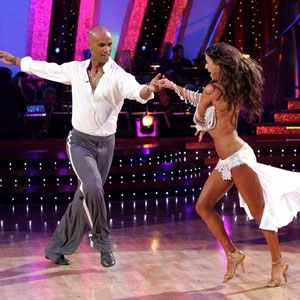
5 Leadership Lessons from the Dance Floor

300.taylor.dwts.051208

1. Dance full out. You can dance small or you can dance big. Have you watched 'Dancing With the Stars'? Do the performers get any points for holding back? Nothe judges want to see full expression and commitment to the movement. Are you committed to your business? Do you really go for it? Put in your heart and soul? If you're going to do something in your business, do it fully. Accept the risk. Make the leap of faith. When you make a decision, get fully invested in implementing it. Get past your comfort zone. Go for it.

2. Leaders take care of their followers. Followers have entrusted themselves to you. It's your job to steer them toward open space and away from potential bumps and bruises from obstacles along the way. It's your job to give good instructions so that they can respond easily. You will learn by how they respond if your instructions were clear enough. You'll continually fine tune your instructions so their responses produce the results you're looking for. If you don't get the response you're looking for, hold yourself accountable and figure out how to be a better leader. Make your followers look good. Whether you're a leader on the dance floor or the office, the same tenets hold true.

080325-taylor-vlrg-730a.widec

3. Followers maintain their own strength, balance, and frame. It's your job to be steerable, not wimpy. Dancers maintain frame, which means they don't let their arms collapse or their shoulders give or their spines twist. If their bodies turned to spaghetti, the leaders wouldn't be able to steer them anywhere. In the business world leaders expect you to use your judgment, maintain the company values, keep yourself stable and strong to fulfill your role. Followers provide real feed back that comes from a center of strength. It helps the leader be a better leader.

4. The value is in being connected. Leaders and followers are responsive to each other's movements. Good dancers connect with each other. In business we connect 285.yamaguchi.dtws.040108with our clients and with our employees. Gallup polls show that customer loyalty is not as much about customer service as it is about empathy and the emotional bond that forms among people who make each other feel special and unique. Retaining clients reduces marketing costs and increases buying frequency. Employee retention reduces turnover costs, increases the stability of the customer experience and retains knowledge within the organization . Understanding the emotional intelligence of leveraging points of connection can make or break your bottom line. It's a business strategy.

5. It's all about action. Dancing requires action. You can't learn or practice dancing by just watching. You have to get up and do it. In business we also learn by doing. Sure you can watch someone else for a while, or read about a subject. But you really need to be doing business everyday to sense the pitfalls, understand the terrain, and experience the joy of success. You can plan all you want, but it's execution that will make revenues

Is Your Customer Loyal Enough?

You've sold a product or a service. You've calculated your cost and sold it at a profit. So the sale is profitableright? Not so fast. Is this the first sale to this 04_31_29_web leadercustomer? Have you calculated your customer acquisition cost? If you sold something for $100 and made $20 on the sale and your customer acquisition cost is $60, you may need to make three sales to that customer just to break even.

So what is customer acquisition cost? It's everything that goes into you getting customers. Here are some obvious examples: your website, media and print advertising, the salaries of your marketing staff, the salaries and commission of the sales team, business cards, brochures and letterhead, gifts that you buy to give to customers, dues and fees to go to events and association meetings where you find your customers, lists that you buy to get new customers, the costs associated with your newsletter.

Here are some less obvious costs: You brand yourself in a particular way through having a clean and sophisticated office, special shirts or uniforms for your workers, your name painted on your vehicles, the music and ease of use of your phone system, the portion of your receptionist's salary that greets customers, and any other things that create your brand awareness. The point of having a brand is to attract customers so these costs should be included as well. And if you're the decision maker, you're using some of your time to focus on customer strategies, niches, problems, sales people issues, etc. So allocate some of the cost of your time, too.

This is the whole point of customer loyalty. If you spend all this money to get a customer and he's a one-and-done single transaction, you've lost a lot of money. If, however, that customer becomes a raving fan, he repeatedly buys your product or service and you can start making money from him. If he then refers other people to buy your product or service, you've made more money from him and your customer acquisition costs can be decreased.

So how do you achieve greater customer loyalty? The experts and the research say personal points of connection occur at every point where someone from your organization interacts with a customer. Making that customer feel respected, unique and special, showing empathy, defusing stressful situations and turning that energy into something positive are all ways to build customer loyalty. Whether the buyer is buying a candy bar in a drug store or a multi- million dollar contract, personal connection keeps the customer coming back. That is the ultimate customer loyalty test. Does s/he come back?

I encourage you to:

  1. Decide on a past time frame, most likely the last 6-12 months, so you can establish your company's metrics. You can pull these numbers from your accounting system.
  2. Make a list of all your obvious and not-so-obvious customer acquisition costs,
  3. Divide the total of your costs by the number of new customers generated during that time frame. That will give you your acquisition cost per customer.
  4. Calculate your average sale and your average profit.
  5. How many times do you need to earn that profit before you've covered the acquisition cost for that customer? (Divide the cost per customer by the profit per sale.)
  6. Show this to your sales team to make sure they know when that customer starts becoming profitable to the business.
  7. Show that to your product/service fulfillment team so they know how many times that customer has to keep coming back just to break even on the customer acquisition cost and before the profit starts to pay their salaries.
  8. Provide customer loyalty development workshops to focus you and all your staff on effective points of connection, handling stress, handling unhappy customers, being positive, and the importance of internal and external customer loyalty.
  9. Recalculate every year and track your progress with each customer, and as a total business.

Implementing these steps and actions should help you create a business structure that is profitable and rewarding for the long term. Please feel free to contact me to discuss these strategies and other solutions you can implement in your business.

'Plug the Leaks' Method of Boosting Your Profits

Ever seen a leaky pail that you're trying to fill? It never gets full because as much as you're filling up the topthere is water pouring out of the cracks in ist1_996257_cash_flow_problems_incl_jpegthe bottom. Do you work hard to get customers? If they don't stay for a 2nd purchase, you've got 'leaky pail' syndrome.

I've been reading the book we'll be talking about at the next Business Book Discussion Group, The Loyalty Effect. Reichheld's research in many industries and countries shows that just by increasing your customer retention by 5% (plugging a leak in your pail), you can increase your profits by 25 to 100%. That's mind blowing, what would you do with 100% more profit? So how does that happen? Here are the 5 ways loyal customers build a business' profit.

1. Base profit. Every time you sell a product or service there is the usual profit the business takes every time the purchase happens over the time period, for instance, 7 years. That remains stable.

2. Revenue Growth. When customers are loyal they buy more, sometimes more of the same product or service, often other things that your business offers. As they get more comfortable they buy even more.

3. Cost Savings. Repeat customer sales cost less to process, less time to take the order, fewer mistakes, better relationships between the buying person and the selling person with more trust, more knowledge of how that customer can be delighted or their sale customized, more order predictability yielding better business planning (Covey's Speed of Trust is relevant here. We discussed that book in a previous Business Book Discussion Group. When trust goes up, speed increases and costs go down.)

4. Referrals. Loyal customers give very credible referrals and to people like themselves generally, who have the potential to also become loyal customers. The loyalty coefficient of the organization increases tremendously.

5. Price premium. Loyal customers usually are willing to pay full price because they see the value in what they are receiving and the people who are providing it. They aren't looking for discount coupons and promotional pricing. They like doing business with your company and pricing is not their top issue. Loyal customers are like annuities. Their value just keeps on growing.

Reichheld also maintains that customer loyalty and employee loyalty go hand-in-hand. One doesn't exist without the other. Happy employees generate happy customers and vice versa. Investing in your employees is a necessary component in increasing the employee retention and, therefore, the customer retention in your organization.